
Agroecology Pays Off: Report Highlights Major Gains for Burkina Faso Farmers
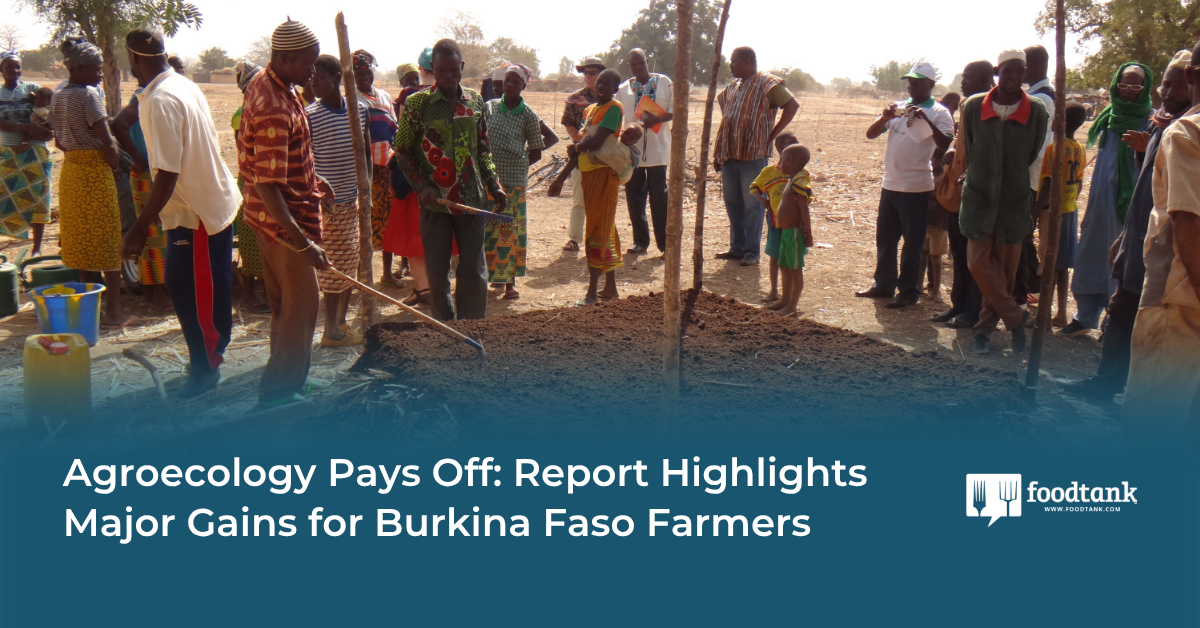
“In Burkina Faso, farmers using nature-friendly methods are seeing bigger harvests and higher incomes even in areas hit hard by drought, floods, and conflict The post Agroecology Pays Off: Report…”
A recent report from Altus Impact, Groundswell International, and the Association Nourrir Sans Détruire (ANSD) finds that agroecological practices produce better results for farmers in Burkina Faso.
The results hold even in drought-stricken areas, with producers seeing higher crop yields and better financial outcomes. The report, Transformational Agroecology in Burkina Faso, provides concrete data that agroecological practices are key to establishing stable farms and farmers.
Extreme rains, flooding events, severe droughts, armed conflict, and deforestation are contributing to large-scale land degradation, displacement, and food insecurity in the landlocked nation. The U.N. High Commissioner for Refugees reports that more than 2 million people were internally displaced at the end of 2024 in Burkina Faso.
"It was important for us to create this assessment now to show evidence that agroecology can not only feed the growing population thanks to its ability to significantly increase farm yield, but also augment farmers' and their households' revenue." — Tsuamba Bourgou, West Africa Regional Coordinator, Groundswell International
The authors analyzed data from over 400 small-scale farming households in eastern Burkina Faso, comparing per-hectare profitability across different farming styles. These ranged from conventional to early and advanced agroecological practices.
Farmers practicing advanced agroecology, defined as using three or more practices such as zaï, half-moons, low tillage, no residue burning, stone contour barriers, and Farmer-Managed Natural Regeneration of trees, saw yields that were 77 percent higher than conventional farmers. That figure was nearly double those of farmers just beginning their transition.
According to the Transformational Agroecology report, 80 percent of Burkinabé depend on farming and pastoralism for their livelihoods. Yields, food security, and farmer income are critical measures of success in the report.
Advanced agroecological farmers fared dramatically better on both fronts: they held median food stocks of 300 kg, triple those of farmers still in transition. They were also far less likely to have run out of food in the past year (13 percent versus 45 percent).
They also carried significantly less debt, US$8 compared to US$35, and showed greater creditworthiness with rural banks and other financial institutions.
"It enables income diversification (crops, forest products, livestock) and ensures a decent standard of living. Farmers who adopt these practices have less debt and better financial solvency." — Ali Dianou, co-author of the report and Executive Director, ANSD
Farmers practicing advanced agroecology saw 67 percent higher net incomes than farmers using few or no agroecological practices. Agroecology also offers environmental benefits, helping vulnerable farming communities remain on their land even in the most difficult climate conditions, potentially keeping climate displacement at bay.
The report finds that agroecological farmers witnessed soil regeneration, which improved soil health, fixed nitrogen, and reintroduced stronger root systems less prone to erosion. All of this helps retain soil moisture and creates a buffer against both drought stress and flood risks.
Groundswell International, ANSD, and Altus Impact aim to scale agroecological practices at a territorial level, using the report's findings as a tool for advocacy and community sensitization. The report has already been shared widely among NGOs.
Looking ahead, Dianou outlined several long-term goals for ANSD, including the development of a national agroecology strategy for Burkina Faso. ANSD also aims to shift public funding away from chemical fertilizers and toward organic alternatives, while attracting private investment through blended finance and risk mitigation instruments.
They hope that this work can center the role farmers play in shaping agricultural knowledge informed by indigenous practices.
Deep Analysis
AI Intelligence
Key Impact
- Advanced agroecological farming in Burkina Faso boosts crop yields by 77 percent compared to conventional methods, even in drought-prone areas.
Background
- Burkina Faso, a landlocked West African nation, faces severe climate stresses including droughts, floods, and desertification, which degrade land and displace communities.
Benefits
- Agroecological practices like zaï pits, half-moons, and stone barriers conserve water and improve soil moisture, buffering crops against erratic rainfall.
Verify critical information independently.